
An auditor who knows the business from the inside out
The majority of America’s 1.8 million farmers are members of farmer‑owned cooperatives, according to the National Council of Farmer Cooperatives. Together, those cooperatives support more than 200,000 jobs nationwide. They generate $300 billion in sales — making them a critical part of the U.S. economy and food supply.
CPAs help keep those farmer‑owned businesses operating with confidence amid complexity. Take Matt Gardiner, CPA, as one example.
“I’m third generation in our firm,” Gardiner says. “My grandfather started our company in 1964, and my father and his brother followed in their dad’s footsteps. And then I followed in my dad’s footsteps.”
Today, Gardiner is a partner in a Midwest firm with operations in Iowa, Illinois, Nebraska, and South Dakota that has spent more than six decades focused almost exclusively on agribusiness cooperatives — member‑owned organizations that sit at the intersection of agriculture, natural resources, and critical supply chains. That focus shapes every audit he performs.
Audit as a tool for better decisions
For business leaders, the value of an audit depends on one thing: whether the auditor truly understands the business. For more than 60 years, Gardiner + Company has focused almost exclusively on agribusiness cooperatives — member‑owned organizations. As a third‑generation CPA and partner who works directly in the field, Matt Gardiner doesn’t just review financials. He brings deep, operational insight into every audit engagement.
That industry focus matters. Agribusiness cooperatives face unique financial, tax, and governance challenges. Gardiner’s audit work is designed to reflect how these businesses actually operate — in an industry that is seasonal, capital‑intensive, and highly regulated.
Therefore, his clients don’t see audit as a once‑a‑year requirement. They see it as an ongoing resource. Many cooperative CFOs and controllers come from operational or long‑tenured roles, not formal accounting backgrounds. As a result, they regularly turn to their audit team for guidance on unfamiliar transactions, new accounting standards, or unique and complex events like mergers, acquisitions, or discontinued operations.
Through the audit process, Gardiner helps clients evaluate the financial and tax implications of key decisions, especially around patronage. Patronage allocations directly affect the cooperative’s members, balance sheet strength, and long‑term equity structure. By advising on how earnings are allocated, retained, or distributed, audit becomes a strategic input into capital planning, not just a historical review.
Turning risks into competitive strengths
Inventory is one of the largest and riskiest line items for agribusiness and one of the hardest to measure accurately. In many grain facilities, a single inch of measurement error can translate into tens of thousands of dollars in misstated inventory.
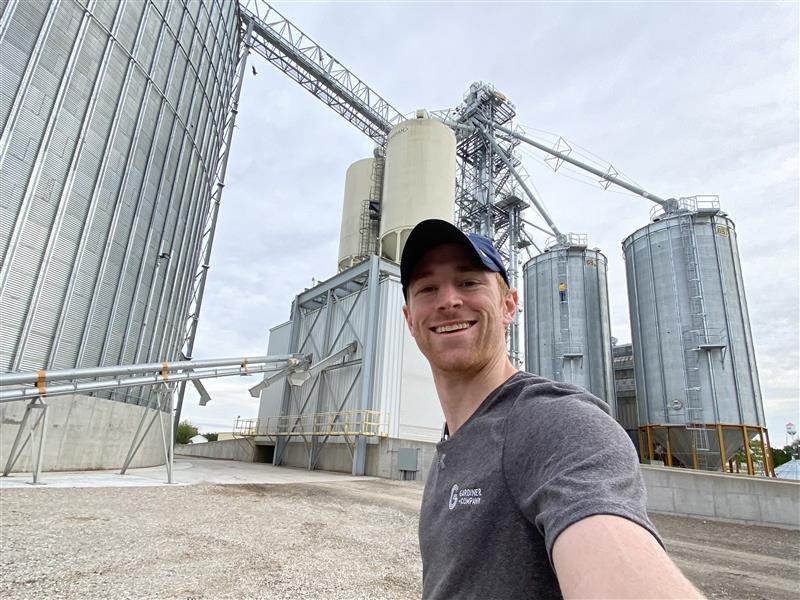
As part of his audit work, Gardiner physically climbs grain bins to conduct inventory observations, using laser measurements to calculate precise volumes. Seeing a broader need, he and a colleague developed a free, easy‑to‑use calculator tool that helps clients measure grain and fertilizer inventory accurately throughout the year — not just at audit time.
The result: fewer surprises, stronger internal controls, and better real‑time inventory management. That’s audit delivering proactive value.
Another example of delivering value can be seen in the work the firm did to help a client rebuild its accounting network after the client lost its data in a ransomware attack. Drawing on its audit files and other records, Gardiner + Co. was able to help the client recover.
A smarter audit through AI and data
Modern audit work demands more than checklists and sampling. In his audits, Gardiner leverages artificial intelligence, machine learning, and data mining to analyze full populations of transactions — identifying anomalies, patterns, and outliers that conventional approaches can overlook. These tools don’t replace professional judgment; they sharpen it. Time is freed for the audit team to focus on the transactions and trends that most affect a cooperative’s financial health. The result is a rigorous, more efficient audit — and clients who get better answers, faster.
Trusted insight for boards and stakeholders
Audit credibility matters most where oversight is highest. Cooperative boards hire Gardiner + Company not only to issue an opinion, but to provide confidence. Because the firm audits similar organizations across the region, boards know their auditor has a clear view of industry benchmarks, emerging risks, and best practices.
Gardiner works directly with boards and management. From boardrooms to grain elevators, he represents a blend of technical expertise and hands‑on understanding, building trust that supports sound governance and better strategic decisions.
Why this approach matters
For business decision-makers, audit should enable clarity, confidence, and action. Matt Gardiner’s work shows how audit — done with focus, expertise, and genuine partnership — protects assets, improves decisions, and strengthens organizations that matter to their communities and the economy. Auditors help businesses run better.